








Implementation of a workshop about the role of the hospital pharmacist role during the clinical clerkship in medical training
European Statement
Education and Research
Author(s)
Vincent ARCANI, Stéphane HONORÉ, Guillaume HACHE
Why was it done?
Interprofessional collaboration as an effective means for improving healthcare outcomes. In order to achieve an effective level of collaborative healthcare practice, health care educators must focus attention on interprofessional education in undergraduate programs. Knowledge of professional role of others is a key competency for interprofessional practices and there is a lack of knowledge on hospital pharmacists’ roles among other health care professionals.
What was done?
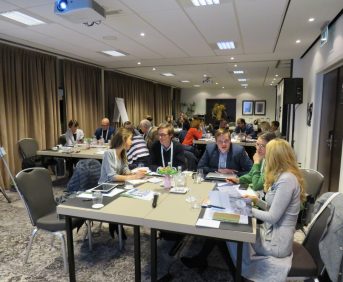
We developed a workshop focused on the role of hospital pharmacists, to be integrated into the curricula of other health professionals.
How was it done?
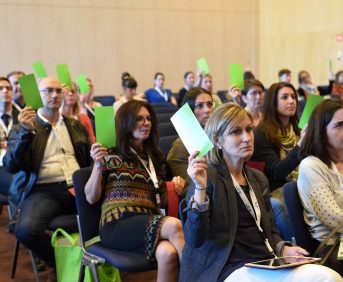
The workshop was developed by a resident in hospital pharmacy and a senior hospital pharmacist, and we first targeted medical curriculum. The session integrated: students’ perception of hospital pharmacists’ role, didactic learning on the role of hospital pharmacists according to the European statements in hospital pharmacy, immersion in practice and evaluation. The assessment of the learning effect was performed by a pre-/post-workshop questionnaire, assessing satisfaction, metacognition and acquired knowledge. In addition, students provided open feedback on the workshop.
What has been achieved?
We implemented the workshop during the first year of clinical clerkship in medical education. Preliminary results highlighted (i) a high satisfaction, illustrating the relevance of the initiative; (ii) an increase in perceived knowledge and (iii) an increase in knowledge about hospital pharmacists’ roles, especially about pharmaceutical technologies and medical devices. Verbatim analysis of the feedback suggested that the workshop modified medical students’ perceptions on the role of hospital pharmacists, and that they may be more inclined to seek collaboration with hospital pharmacists.
What next?
To integrate the workshop into the curricula of the other professions in order to raise awareness on hospital pharmacy and promote interprofessional teamwork.
OPTIMIZATION OF DRUG MANAGEMENT
European Statement
Patient Safety and Quality Assurance
Why was it done?
To avoid stock breaks by ensuring at all times the existence of the medicines included in a 2nd level hospital.
What was done?
Optimization of medication management in a Hospital Pharmacy Service (HPS) through the development and use of a purchasing planner.
How was it done?
One obstacle we encountered was knowing the inventory in real time. This required a computer program for stock management, human resources or intelligent warehouses to enable real-time inventory control.
After the training, learning and updating of working procedures, an analysis of the consumption of the drugs included in the pharmacotherapy guide was carried out in order to calculate the minimum stocks, safety stocks, maximum stocks and order points.
Data were loaded into the management software and parameters were defined so that when a drug reached the point of order a purchase proposal would be made until the maximum stock was reached.
What has been achieved?
In February 2020, the purchasing planning system was implemented. The planner’s lists were parameterized to organize the drugs by therapeutic groups or areas of interest within the HPS. In addition, communication among all professionals was enhanced for rapid response to a lack of medication and a periodic inventory counting plan was designed to ensure adequate stock.
After changes, more than 80% of HPS medications are ordered through purchasing planning, reducing stock breaks due to never reaching the safety stock of selected drugs.
What next?
This system is applicable to all HPS that has the same management software. It is necessary to have an optimization system in the drug management to ensure their real stock in the hospital environment and their availability for patients.
Telepharmacy and Home Delivery implementation during COVID-19 pandemic
European Statement
Selection, Procurement and Distribution
Author(s)
Francisco José Toja Camba, Carmen Lopez Doldan, Laura Casado Vazquez, Aron Misa García, Pilar Rodriguez Rodriguez, Maria Elena Gonzalez Pereira
Why was it done?
Hospital Pharmacy must develop new models of pharmaceutical care (PC), improving patients quality of life and enhancing care services. One type of these strategies are non face-to-face PC, such as telepharmacy and home delivery, achieving a new integrated and patient-centered healthcare model.
COVID-19 health crisis and the need to ensure the delivery of medicines to susceptible people and guarantee home isolation, has motivated a paradigm shift in health care.
What was done?
• Guarantee quality of care in pharmacy consultations (PCC) due to COVID-19 pandemic.
• Implantation of telepharmacy and home delivery of hospital medication.
How was it done?
Three different circuits were designed:
1. Single healthcare act of face-to-face visits in PCC coinciding with other medical appointments. Prior appointment, non-contact consultation agendas and extension of service hours were reinforced.
2. Informed home delivery of hospital medication at home, after prior teleconsultation: pharmacotherapeutic follow-up and request for informed consent. Management and preparation of packages, including motivational messages, to humanize the process. Distribution logistics model based on defined routes and schedules. The confidentiality, security and traceability of the entire process was certified.
3. Open and permanent communication channel between patient and pharmacist that enabled individualized PC.
Patients with mobility problems, home isolation or chronic processes with a higher risk of COVID-19 infection were prioritized.
What has been achieved?
From March to May 2020, 1,938 pharmacotherapeutic follow-up teleconsultations were carried out (291 patients had been attended in person due to having another medical appointment or due to personal preferences). Medication was home delivered to a total of 1,647 patients. A total of 120 routes were made between the four established routes (average of 15 shipments per working day). Percentage of satisfaction expressed by the patients was 95%.
Main limitations were:
1. Operational challenge: changes in workflows, organization of schedules and work times, increase in telephone lines, route management in a very dispersed geographic area, technology gap (mean age ≥ 60 years) …
2. Human resources.
3. Medication shipping cost.
What next?
• Development of new management tools: telepharmacy and home delivery and pharmacotherapeutic follow-up of patients guarantee continuity of non-face-to-face PC.
• We must support initiatives that certify efficient and safe care as well as humanitarian care.
Implementation of an artificial intelligence tool for the detection of drug safety problems
European Statement
Patient Safety and Quality Assurance
Author(s)
Noe Garin, Laia Lopez-Vinardell, Pau Riera, Adrian Plaza, Ivan Castellvi-Barranco, Jose Mateo-Arranz, M. Antonia Mangues
Why was it done?
APS is a rare disease with a high risk of thromboembolism. Recently, some data suggested an increased risk of thrombotic events with direct-acting anticoagulants (DOAC) compared with vitamin K antagonists in APS. Some agencies advise against the use of DOACs in these patients.
This methodology can be extrapolated to other risk situations, so this was a first step with AI to further detection of safety issues.
What was done?
We implemented an Artificial intelligence (AI) tool based on natural language processing (SAVANA®) to identify patients at risk of thromboembolism, defined as Antiphospholipid Syndrome (APS) diagnosis treated with direct-acting anticoagulants (DOAC). SAVANA® is an AI tool able to extract information contained in free-text from electronic clinical records.
A prior operation work was conducted, involving: direction, pharmacy, documentation, IT, SAVANA®, data protection. The work and previous meetings evaluated: feasibility, previous requirements, privacy issues, IT involvement and contract signings.
How was it done?
The implementation consisted of:
– Transference of medical record information to the SAVANA® cloud.
– Identification of the health problem (APS) and initial search.
– Search algorithm optimization in a multidisciplinary team.
– Evaluation of the search by SAVANA® by peer review in a sample of randomly selected cases (n=200).
– Precision and sensitivity analysis. Algorithm improvement.
– Obtaining the Gold Standard and validation.
– Definitive search for the detection of patients with APS in treatment with DOACs and performance of interventions.
What has been achieved?
The project implementation is at a very advanced stage. The algorithm has currently been evaluated and is being refined after precision and sensitivity analysis. Final validation and definitive identification of patients at risk is expected at the end of 2021. Patients detected during the implementation method have been evaluated with the haematology team.
What next?
This methodology can be implemented in any centre with computerized medical records. The use of AI is the only tool available for the identification of certain groups of patients when health problems are not coded. In other cases, its use regarding the extraction of lists allows a great capacity for analysis, absence of biases derived from human error, guarantee of reproducibility and complementary data obtention, mainly in samples of high size.
Distribution optimization of oral oncology therapy in the treatment of advanced renal cell carcinoma: between environmental impact and indirect costs
European Statement
Introductory Statements and Governance
Author(s)
Nicola Nigri, Maria Antonietta Calzola, Silvia Di Marco, Elisa Di Maio, Benedetta Fagotti, Martina Savoia, Luciana Negroni, Fausto Bartolini
Why was it done?
The 1st line treatment in RCC provides Pembrolizumab 200mg IV/21 days plus Axitinib (56cps/pack) P.O./BIS meaning two journeys. The PT and or CG have to come back to the hospital at different moments from the infusion date for 9 times/year, affecting negatively: the compliance, the IC, the patient’s follow-up and, the environmental impact.
What was done?
In Italy, the 1st line treatment of advanced renal cell carcinoma (RCC) involves 4791 new diagnoses/year. The most innovative therapies imply the association of intravenous therapy (IV) and oral chemotherapy.
In this case, the Hospital Pharmacist (HP) can assist the compliance and help to minimize the impact linked to indirect costs (IC), often unconsidered, through the reduction of the patient (PT) and or caregiver (CG) trips, improving also their quality of life. The HP can participate in decreasing the CO2 emissions that, in 70% of the cases, are generated by road transportations.
How was it done?
On the IV therapy day, is given to the patient, the oral treatment too (42cps), provided with the necessary documents.
To measure the IC has been considered the organizational costs to the PT and or CG. The time commitment was estimated, in the worst case, in a 2h return journey (150km) between the PT/CG location and the dispensation point. It has been considered 30min as the estimated time to park, arrival, waiting time in pharmacy, drug pick-up and back.
The average hourly earnings considered has been 13,6 €/h. The average diesel-engined utility car emits 95g/km of CO2 emissions.
What has been achieved?
Each avoided trip is 2h x 13,6€ = 34€ for missing productivity or 68€ if both are involved. The total IC avoided/year/PT is the number of avoided journeys/year x 34 = 306€ (612€ if both are involved).
The CO2 emissions are equal to 95g x 150km =14,25kg/distribution/PT, 128,25 kg/year/PT, equal almost to 2,3% of CO2 emission perceived in Italy, that, in the worst case, times the incident PTs/year that will become 614.000tonnes/year.
What next?
The HP shows, even more, its influence on more layers: clinic, economic, and environmental to benefit the patient, our NHS, and our planet, hoping in this approach in more combined therapies.
Hospital pharmacists contribute to a safe and efficient use of chimeric antigen receptor T cell drugs.
European Statement
Selection, Procurement and Distribution
Author(s)
José Luis Revuelta Herrero, Vicente Escudero, Roberto Collado, Belén Marzal, Ana Herranz, María Sanjurjo
Why was it done?
CAR-T cell-based therapies are advanced therapy medicinal products (ATMP) that are considered as drugs by the European regulatory authorities. ATMPs are usually associated with strong logistic and traceability requirements, serious adverse events and a high budget impact. Hospital pharmacists can help ensure a safe and efficient use of these drugs.
What was done?
A chimeric antigen receptor (CAR) T cell Therapy Committee was created in 2019 and it included members from the hematology, oncology, pediatric onco-hematology, hospital pharmacy, neurology, critical care medicine and immunology departments. An operating procedure defined the specific functions of the pharmacy department in the management of these drugs in the CAR-T cell program.
How was it done?
As some responsibilities might be shared with other professionals, it was key to define everyone’s contributions. In our case, an operating procedure with the responsibilities of the pharmacy department was developed based on the national and regional action plans for ATMPs in the national health system and the risk management plans for each drug. This operating procedure was reviewed and approved by the Committee.
What has been achieved?
The operating procedure was fully implemented and included the participation of hospital pharmacists in the following steps:
• Procurement: the inclusion of a patient in the program is agreed upon the Committee. The pharmacists provide a purchase order when all the requirements are met.
• Leukapheresis and shipment to the manufacturer: the apheresis is included in the computerized physician order entry (CPOE) and it is verified to confirm wash-out periods. Before the shipment, the pharmacists record the apheresis unique identifier and patient data.
• Product receipt: the pharmacists verify at receipt that the patient identity chain and the integrity of the product have been preserved.
• Bridge and lymphodepleting chemotherapy, CAR-T administration: specific protocols have been included in the CPOE. Prescriptions are verified by the pharmacists with special attention to the drug-free periods. After transporting the drug to the clinical unit and preparation, a pharmacy label for dispensing and administration is generated. This label includes a barcode for patient identity verification at bedside.
• Outcomes monitoring and pharmacovigilance: kits are provided to the clinical units for the management of CAR-T associated toxicities. Pharmacists are responsible for the adverse reactions reporting in coordination with clinicians.
What next?
We developed verification lists for each of the previous steps that have already been published (DOI: 10.3389/fonc.2021.636068). More ATMPs are expected to come and their management will require the participation of hospital pharmacists from different areas of expertise (procurement, clinical pharmacy, compounding etc).
OUTPATIENT ADMINISTRATION OF BLINATUMOMAB FOR ACUTE LYMPHOCYTYC LEUKEMIA
European Statement
Clinical Pharmacy Services
Author(s)
MV VILLACAÑAS PALOMARES, CM VALENCIA SOTO, A GARCIA-AVELLO FERNANDEZ-CUETO, M MARTIN LOPEZ, S BARBADILLO VILLANUEVA, M OCHAGAVIA SUFRATEGUI, V MARTINEZ CALLEJO, M RIOJA CARRERA, P DEL RIO ORTEGA, M VALERO DOMINGUEZ
Why was it done?
This drug is administered continuously during a 28 days infusion. Due to the risk of cytokine release syndrome (CRS) it is initially administered in the inpatient setting and then transitioned to the outpatient, requiring an important interdisciplinary coordination to optimize the process.
Home-based chemotherapy offers several potential benefits: reduced exposure to hospital infections, less disruption of routine and family life, lower health care cost, …
What was done?
Pharmacy and haematology services designed a workflow for the outpatient administration of blinatumomab, a bispecific T-cell engager approved for relapsed ALL.
Here, we describe our experience transitioning from inpatient to outpatient setting.
How was it done?
First step was to review blinatumomab stability, as well as material compatibility and transfer set necessaries for both hospital and domiciliary administration.
Reconstituted blinatumomab may be stored at refrigerated (2-8°C) for up to 24 hours. Prepared infusion bag (with preservative) may be stored at room temperature (up to 27°C) for up to 96 h and for up to 10 days refrigerated (2-8ºC).
Second step was to establish with the haematology service the patient´s scheduled visits to the hospital to ensure maximum stability of the blinatumomab preparation.
We decided to prepare the blinatumomab infusion bag every three- or four-days beginning on Monday, Thursday or Friday avoiding visits on weekends.
In order to take advantage of the rest of the vial, we diluted itn a new bag with stabilizer solution but without in-line filter for the next preparation. We noted the date of elaboration and the amount of medication remaining.
We used this preparation initial in each new visit add the dose necessary and an in-line filter. We primed the filter with the prepared solution for infusion
What has been achieved?
Out of the four patients who have received blinatumomab in our hospital(May 2020 – September 2021), three have benefited from this circuit.18 doses were administered at home, avoiding 68 days of hospital admission.
What next?
Outpatient administration could reduce health expenditure, therefore allowing for additional investments in new therapies.
Since the use of blinatumomab is not very common and there is not much evidence at this respect, our experience can help other Pharmacy Services to implement this circuit.
Structured implementation to secure rapid and efficient changes of medicines: a national workflow
European Statement
Introductory Statements and Governance
Author(s)
Mikala Vasehus Holck, Jette Østergaard Rathe
Why was it done?
The role of the National Medicines Council (NMC) is to provide guidance about new medicines for use in the public hospital sector.
Recommendations from the NMC must be implemented at hospitals. Implementation of changes of medicines requires preparation and collaboration and involves numerous stakeholders, e.g. drug and therapeutic committees, hospital pharmacies, clinicians, and the national supply organization (NSO) to public hospitals. Knowledge sharing is crucial to ensure efficient implementation.
We needed a workflow focusing on knowledge sharing at national level, and thus we introduced the structured implementation workflow in September 2019.
What was done?
We have established a structured implementation workflow focusing on knowledge sharing. The workflow ensures rapid and efficient implementation of changes of medicines, and a more aligned treatment at national level.
How was it done?
To ensure knowledge sharing through the workflow, we developed:
– Implementation memo: Summarizes NMC recommendations and treatment guidelines, with information about current and upcoming tendering procedures and prices. The memo is shared with the stakeholders.
– Implementation group: The group is a mix of people with a direct connection to the implementation workflow. The group ensures that implementation of the recommendations from the NMC is regularly discussed and assessed.
– Implementation site: An intranet for the NSO and hospital pharmacies to share information and material related to the implementation of changes of medicines.
– A system to ensure that essential stakeholders receive the same information.
What has been achieved?
The structured implementation workflow has been a success and is now an integrated part of implementation. Evaluation shows that the workflow with knowledge sharing between relevant stakeholders is essential for effective implementation of changes of medicines, and it identifies discrepancies at national level.
What next?
The structured workflow is an integral part of managing the national implementation, and the workflow and outcomes will continue to undergo evaluation.
The workflow provides the basis for knowledge sharing and can easily be transferred to other healthcare settings.
WEB DIALOGUE: ONE MORE STEP IN TELEPHARMACY

European Statement
Introductory Statements and Governance
Author(s)
ARDIZONE BEATRIZ, MARTA HERNÁNDEZ SEGURADO, MARÍA FORTE PÉREZ-MINAYO, LAURA GARCÍA JIMÉNEZ, ELENA TORTAJADA ESTEBAN, ANA CORDERO GUIJARRO, NATALIA BARRERAS RUIZ, LAURA JIMÉNEZ NAVARRO, JAVIER BÉCARES MARTÍNEZ
Why was it done?
First, we had a high number of patient inquiries by phone and by email. Furthermore, patient queries related with their treatment and their resolution were not recorded in the electronic clinical history. Finally, we needed a communication platform that would guarantee personal data privacy.
What was done?
In collaboration with the IT department, we developed a software tool called “Web Dialogue” within the e-health portal of our institution. This tool allows the patients to communicate with the pharmacist using a chat box where they can write queries about drug interactions, adverse effects and any questions about the hospital dispensing treatments, as well as other medications and herbal products. A pharmacist answers the queries within 24 hours, from Monday to Friday.
How was it done?
We asked the IT department to activate this tool for all active patients to whom we dispensed medication in our service (a total of 8000 patients). The development lasted 2 years (2017-2019), but it was not until March 2020, with the start of the COVID-19 pandemic, that the “Web Dialogue” began to be used by our patients more widely. We also made an informative video that was posted on the e-health portal in order to achieve a wider knowledge of this tool among patients. See link: https://www.youtube.com/watch?v=_Z9pd93sNY8
What has been achieved?
The median number of messages per month in 2020-2021 was 202 (IQR= 100,5; 468). At the beginning of the state of alarm in Spain there was a peak in the use of the “Web Dialogue”, mainly to query about how to access the medication (94% of the queries). Over the following months, the proportion of these consultations decreased and consultations regarding doubts about treatment, adverse effects and drug interactions increased. Furthermore, the Net Promoter Score (NPS), an indicator that allows us to measure the satisfaction of patients, shows that in the last year we have achieved, for the first time, a score over 60, which is considered excellent.
What next?
Some of our ideas for the future are: the possibility of selecting the type of inquiry and the interlocutor by the patient, creating algorithms for the automatic response of certain questions and carrying out Big Data research studies.
NEW DISPENSATION CIRCUIT TO MEDICAL DAY HOSPITAL TO REDUCE THE PATIENT’S EXPOSURE TO COVID-19.
European Statement
Patient Safety and Quality Assurance
Author(s)
PILAR PACHECO, MIGUEL ÁNGEL CARVAJAL, JAVIER IBAÑEZ, LYDIA FRUCTUOSO, PAULA TORRANO, MARIA HERNÁNDEZ, JUAN ANTONIO GUTIERREZ, JOAQUIN PLAZA
Why was it done?
Since the covid 19 pandemic, the hospital environment has become a place of risk, especially for the oncological and immuno-depressed patient, so it is important to reduce the exposure of the patient and the risk of covid19 infection.
What was done?
The pharmacy service (PS) has designed this new delivery circuit for supportive treatment (master suspension formula for mucositis and colony-stimulating factors) with the aim of reducing the risk of Covid-19 infection associated with the hospital environment.
How was it done?
The circuit and the main stages are:
1. The MDH orderly comes to the PS to deposit the medical prescriptions of the patients who are receiving treatment at that time.
2. The PT prepares the treatment of each patient, always checking that prescriptions and the date of the current day. If it is a continuation of treatment, the PT will verify that the same dose is maintained and will proceed to dispense the medication with the dispensing program. If it is a new treatment or a change in dose, the PT will notify the pharmacist so that he must validate the prescription first and then the PT can dispense it.
3. The prepared medication, together with its information sheet, is placed in bags that are identified with the patient’s name pending let the orderly come to remove them.
What has been achieved?
The circuit was implemented in January 2021, after analyzing the risks that excessive wandering around the hospital poses for immunosuppressed patients, including stays in the PS waiting room.
Since the implantation of the circuit, have been dispensed: 43 suspension formula for mucositis, 25 filgrastim, 12 darbepoetin and 11 pegfilgrastim. So far, the circuit has operated in a coordinated way, contributing to the improvement patient care, avoiding wandering through crowded areas, without giving up individualized care.
What next?
The fact of preventing patients from going to the pharmacy waiting room to withdraw their support treatment, which in most cases they carry continuously and know very well, supposes a decrease in hospital ambulation and thus reduces the risk of infection by covid 19.