






Patient with accidental exposition to blood or other body fluids interviews: Training for pharmacy resident through health simulation
European Statement
Education and Research
Author(s)
Mathieu Fournel, Herve Trout , Jean Eudes Fontan , Marie Cabagnols
Why was it done?
At night, our Pharmacy residents are alone to lead the patient interview, which can be stressful and complex. They currently receive a theoretical course as training, which is insufficient and lead us to reinforce their training by organizing this simulation program.
What was done?
In our hospital, treatments for accidental exposition to blood or other body fluids (AEB) are prescribed by the emergency unit doctors and are delivered by our pharmacy residents who also give associated advices. In order to improve the quality of this procedure and train our pharmacy residents, we created and tested simulation case-scenarios of pharmaceutical interview of AEB’s victims with role-playing game.
How was it done?
We based our training program on the French Health Authority guidelines. Scenarios are based on our real-life experiences and potential clinically relevant situations.
What has been achieved?
First, we evaluated pharmacy residents’ theoretical knowledge and their self-confidence about AEB interview with anonymous questionnaires.
We created five different scenarios and tested them during six role-playing game sessions in two weeks with six pharmacy residents.
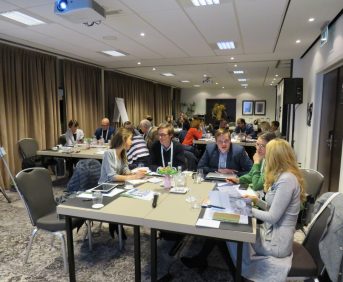
Every session lasted approximatively one hour, each resident played one scenario as a resident and one as a patient. Sessions started with briefing and ended with a detailed debriefing. All our scenarios are efficient, and debriefings were interactive and interesting. Evaluation of the sessions by pharmacy residents showed great satisfaction. They evaluated our scenarios as relevant and rated simulation training higher than lecture-based courses. Moreover, informal feedbacks are very positive.
What next?
Our next step is to film a simulated pharmaceutical interview of AEB’s patient for new pharmacy resident as an example before their first interview. Simulation will be part of the training of every new pharmacy resident in our hospital. Furthermore, we would like to extend simulation training to other types of patient’s pharmaceutical interviews.
FOLLOW-UP OF OFF-LABEL TOCILIZUMAB PRESCRIPTIONS IN COVID-19 IN A FRENCH UNIVERSITY HOSPITAL
European Statement
Education and Research
Author(s)
Caroline TRAN VAN HO, Marie-Anne ESTEVE, Pierre BERTAULT-PERES, Marjorie ROUDOT
Why was it done?
SARS-CoV-2 infection leads to pro-inflammatory molecules production (in particular IL-6). If the immune system is overwhelmed and cytokine production spikes, a hyper-inflammatory phenomenon occurs: the cytokinic storm, which can bring lead to the admission in an intensive care unit. Due to the absence of authorized treatment, several clinical trials (CTs) and off-label use of drugs have been set up.
What was done?
The aim of this study is to analyse the off-label use of tocilizumab in a French university hospital in comparison with different CTs.
How was it done?
A retrospective study of tocilizumab prescriptions in Covid-19 was conducted between 01/03/2020 and 30/04/2021 by extracting data from Computerised Physician Order Entry and Pharmacy Management software (Pharma®). History of patients was recovered by electronic medical records (Axigate®).
Results were compared to (1) RECOVERY Collaborative Group. Lancet. 2021, (2) Hermine O. JAMA. 2021, (3) Rosas IO. N Engl J Med. 2021, (4) Salama C. N Engl J Med. 2021.
What has been achieved?
Between 01/03/2020 and 30/04/2021, 68 patients received tocilizumab.
Seventy-seven percent of patients were in the intensive care unit and 42.6% died, whereas 31.0%, 19.7%, 11.1% and 10.4% died according to (1), (3), (2) and (4), respectively. Mechanical or invasive ventilation at the time of tocilizumab prescription was widely used (84%) compared to CTs (54.0%, 27.9%, 24.0%, 12.2% for (1), (3), (2), (4)). According to (1), there is a synergistic action between tocilizumab and dexamethasone. Eighty-four percent of patients received at least one dose of corticosteroids in agreement with (1) and (4).
What next?
The increase in off-label use of tocilizumab is related to the results of CTs. Because of the low number of patients, the differences in COVID-19 stages at tocilizumab initiation, and the absence of a control group, it is difficult to explain our data. Given the weak iatrogenic effects revealed in CTs and in-label use, the benefit/risk seems in favor of tocilizumab use against COVID-19. Further studies are needed to confirm the first hopes. Since Casirivimab / imdevimab, and amlanivimab / etesevimab have been granted early access in France, the therapeutic strategy will be updated.
The establishment of The Danish Hospital Pharmacy Research Network.
European Statement
Education and Research
Author(s)
Trine R. H. Andersen, Trine Graabæk, Ulla Hedegaard, Lene J. Kjeldsen, Charlotte Olesen, Hanne T. Plet, Anne B. Walls, The Danish Hospital Pharmacy Research Network (DanHoPR Network) On behalf of
Why was it done?
A decade ago, collaboration between Danish hospital pharmacies regarding knowledge sharing, information, procurement and development of services already existed. However, research activities were scarce, and peer reviewed publications were rare. While the Danish universities didn’t have hospital pharmacy as a research area, the research unit called SAFE had been formed under The Danish regions’ joint procurement and tendering organization, to encourage hospital pharmacies to increase research activities. Meanwhile, a handful of hospital pharmacists scattered throughout Denmark had been initiating PhD-projects, but with no formal cooperation or awareness of each other.
What was done?
A national network for researchers in hospital pharmacy was established 10 years ago to strengthen the research activities within hospital pharmacies in Denmark.
How was it done?
The network was established at a meeting in October 2011 gathering the five PhD-fellows, SAFE and potential researchers. The overall aim was to strengthen hospital pharmacy research in Denmark. The terms of reference included creating a forum where established as well as upcoming researchers can meet twice a year to share knowledge and provide feedback on each other’s research. To further strengthen the network and research, funding was raised for a fieldtrip to UK hospital pharmacy research groups. After this, the network decided to promote a more international profile. A LinkedIn site was established along with the design of a logo, an English translation, name and acronym (DanHoPR Network).
What has been achieved?
The DanHoPR Network now celebrates its 10th anniversary and counts more than 30 members from all Danish hospital pharmacies and from universities.
The amount of published research from Danish hospital pharmacies has increased considerably during the 10 years. In total, network members have first authored more than 35 articles, co-authored more than 70 publications, co-supervised more than 80 master theses and PhD-fellows have multiplied over the decade.
The DanHoPR network gather 2-3 times/year in full-day virtual or IRL meetings to collaborate on research, share ideas and discuss subjects such as methodology, interpretation of results, funding, challenges or celebrations.
What next?
The network seeks to collaborate internationally and hopes to inspire to similar networks across Europe or connect to exiting fellow networks.
Entrustable Professional Activity in Medical Reconciliation as an assessment tool to measure competency of pharmacy pre-registration students
European Statement
Education and Research
Author(s)
Ula Bozic, Matthias Witti , Jan Zottmann , Martin Rudolf Fischer, Yvonne Marina Pudritz
Why was it done?
Among other functions of EPAs (description of activities as a guide for students, function as a curriculum guideline), they can be used as assessment tools – in our case, to identify gaps in students’ knowledge/skills and, depending on the results, to aid guiding curricula development of our educational program to ensure high quality training service.
What was done?
Entrustable professional activities (EPAs) are observable clinical activities consisting of knowledge, skills and attitudes that can be entrusted to learners over time. In German pharmacy education, EPAs have not yet been developed or used. For this project, we developed a Medical Reconciliation EPA for pharmacy pre-registration students taking part in a rotational programme at LMU University Hospital Munich. Four steps were required for the development: (1) Development of content for EPA description and the associated checklist by a working group of clinical pharmacists through literature review and work analysis. (2) Validation of the developed EPA and checklist by an independent expert group of clinical pharmacists from across Germany. (3) Application of the EPA and checklist in an assessment situation to check for inter-rater reliability. (4) Roll-out of EPA and checklist for assessment of pharmacy pre-reg students at LMU.
How was it done?
Since EPAs are a new concept in (German) pharmacy education, their concept as well as their assessment process with entrustment decisions required explanation in detail to facilitators and students alike in several workshops, which we have successfully organised and executed.
What has been achieved?
Through the implementation of this EPA, we can assess students’ competencies in performing medication reconciliation, identify the weaknesses of our training programme and adapt the content to improve students` skills in their performance.
What next?
Further EPAs with a focus on hospital discharge and medication analysis are being developed. With EPAs, it is possible to translate theoretical competencies into observable activities that can be assessed in a clinical setting. As pharmacists in Germany are increasingly involved in clinical practice, there is a need to assess their skills in performing day-to-day clinical tasks. EPAs are an excellent tool for this purpose.
DELIVERY OF PHARMACY EDUCATION DURING THE COVID19 PANDEMIC, ONE HOSPITAL’S EXPERIENCE
European Statement
Education and Research
Author(s)
Dearbhla Murphy, Patricia Ging, Jennifer Brown
Why was it done?
The Pharmacy Department at our institution are responsible for the delivery of a number of in-house and University level education sessions to pharmacy, nursing and medical students. In 2020, sessions included: a prescribing workshop for final year undergraduate medical students; nursing induction lectures on parenteral drug therapy; leadership workshops, lectures and site visits for pharmacy students; clinical pharmacist education sessions; and weekly journal club for Pharmacy Department staff. During the COVID19 pandemic, Pharmacy delivered education sessions were challenged with addressing the hospital-wide recommendation that face to face meetings be avoided while maintaining essential training for healthcare staff.
What was done?
Pharmacist led education sessions, both at an in-house and University level, were adapted to virtual platforms during the COVID19 pandemic.
How was it done?
• A pharmacy team of key stakeholders were formed for each education session.
• Educational material was reviewed and revised for suitability for a virtual platform.
• Interactive learning components were explored on the various delivery platforms e.g. Brightspace®, Zoom® and Microsoft Teams®.
• For the pharmacy student virtual site visit, Pharmacy staff prepared short videos about their roles.
• Interactive tools from within and outside the delivery platforms were used e.g. breakout rooms, MCQs, ‘chat’ tools, live quizzes and Menti®.
• Feedback on individual education sessions was sought via email or use of online surveys
What has been achieved?
• All education sessions were successfully delivered virtually.
• Positive feedback was received for all sessions.
• Unexpected benefits gained from virtual delivery, include the availability of recordings which can be used to repeat the session for future students.
• Limitations learned include difficulty retrieving student feedback online.
What next?
The Pharmacy Department successfully adapted the delivery of education sessions, at University and hospital levels, during the COVID19 pandemic to ensure continued delivery of high level education, learning and engagement. The initiatives and learnings from this GPI are transferable to other hospital pharmacy departments.
Design and implementation of a course on “Improving the understanding of biosimilar formulation science through Real-World Training”
European Statement
Education and Research
Author(s)
Paola Minghetti, Giuseppe Danilo Norata, Francesca Selmin, Paolo Rocco, Vito Ladisa, Margherita Galassi
Why was it done?
The availability of mAbs to treat different pathologies is steadily growing, causing a steep increase in the level of training needed in different areas of pharmacists’ intervention, including compounding, handling and storage. As this process will be sustained by the increasing availability of biosimilars, pharmacists, the key health professionals responsible for their compounding and handling, will face new challenges.
The aim of this project is to overcome the common problems encountered by hospital pharmacists in obtaining education on biosimilars, included limited financial support, heavy workload or inadequate educational resources.
What was done?
A self-paced educational course has been designed and implemented with the aim of providing a fundamental grounding in the physical chemistry, pharmacology and technology of monoclonal antibodies (mAbs)-based medicines in oncology, both originators and biosimilars and the methodology associated with their compounding and handling.
The primary target audience for this project consists of hospital pharmacists in the EU, though students in the specialization in Hospital Pharmacy and community pharmacists may benefit from the course.
How was it done?
The course has been designed and developed to address, previously assessed, unmet educational needs. The resulting format comprises both theoretical and remote real-world training on the pharmacology, technology and stability of mAbs, the technology and rationale of biosimilars and the regulatory aspects of biotechnological medicinal products.
What has been achieved?
A series of webinars in on demand movie format has been produced. The webinars contain a comprehensive theoretical section – covering biosimilar mAbs pharmacology and formulative and regulatory aspects – and a practice section in which the preparation steps of oncology mAbs are filmed and discussed in a hospital setting. All training activities have been recorded in remote both in Italian and in English. Every module is designed to be used as a single unit and has a duration of approximately 30 minutes. The total duration of the course is 8 hours.
What next?
The course will be CME accredited in Italy through Fondazione Francesco Cannavò, nonprofit CME provider of the Federation of Italian Pharmacists Associations. It will be made available to pharmacists through national and international CME platforms, providing fundamental grounding in the methodology associated with oncology monoclonal antibody biosimilar formulation.
Implementation of a workshop about the role of the hospital pharmacist role during the clinical clerkship in medical training
European Statement
Education and Research
Author(s)
Vincent ARCANI, Stéphane HONORÉ, Guillaume HACHE
Why was it done?
Interprofessional collaboration as an effective means for improving healthcare outcomes. In order to achieve an effective level of collaborative healthcare practice, health care educators must focus attention on interprofessional education in undergraduate programs. Knowledge of professional role of others is a key competency for interprofessional practices and there is a lack of knowledge on hospital pharmacists’ roles among other health care professionals.
What was done?
We developed a workshop focused on the role of hospital pharmacists, to be integrated into the curricula of other health professionals.
How was it done?
The workshop was developed by a resident in hospital pharmacy and a senior hospital pharmacist, and we first targeted medical curriculum. The session integrated: students’ perception of hospital pharmacists’ role, didactic learning on the role of hospital pharmacists according to the European statements in hospital pharmacy, immersion in practice and evaluation. The assessment of the learning effect was performed by a pre-/post-workshop questionnaire, assessing satisfaction, metacognition and acquired knowledge. In addition, students provided open feedback on the workshop.
What has been achieved?
We implemented the workshop during the first year of clinical clerkship in medical education. Preliminary results highlighted (i) a high satisfaction, illustrating the relevance of the initiative; (ii) an increase in perceived knowledge and (iii) an increase in knowledge about hospital pharmacists’ roles, especially about pharmaceutical technologies and medical devices. Verbatim analysis of the feedback suggested that the workshop modified medical students’ perceptions on the role of hospital pharmacists, and that they may be more inclined to seek collaboration with hospital pharmacists.
What next?
To integrate the workshop into the curricula of the other professions in order to raise awareness on hospital pharmacy and promote interprofessional teamwork.
Patient education after Arthroplasty: what about the implants?
European Statement
Education and Research
Author(s)
Lionel Tortolano, Quentin Misandeau, Muriel Paul, Valérie Archer
Why was it done?
The main objective was to make give more information to the patients and draw their attention on the implant and the signs of adverse events.
What was done?
In 2018, in order to respond to both the sanitary traceability regulatory and the iatrogenic prevention, we initiated a new education session for patients after their hip or knew surgery.
How was it done?
First, the educational tools were developed in collaboration with surgeons, nurses and physiotherapist.
Each patient is seen after his surgery for the educational interview. At the beginning, the pharmacist asks him questions grouped in 4 themes: the implant, adverse events, prohibited movements and medicines.
According to patient answers, the pharmacist gives him complementary information and documents: an implant card and a booklet, which summarized all essential keys about adverse events and the return home.
We measured the efficiency of our education sessions on the knowledge of 80 patients. After the education session, before the return home, the patient was asked a second time to respond to all questions previously asked. The difference of good answers was considered as an increase of awareness.
What has been achieved?
The results show significant impact of this education session on all items especially those regarding the implants and medicines.
What next?
Since this feasibility study, we perpetuate those education sessions. We initiate a randomized prospective study to measure the impact 6 month after surgery on patient knowledge and potential impact on adverse event incidence rate. The result of this second study are expected to spring 2022.
Novel vaccine clinical trials in Africa
European Statement
Education and Research
Author(s)
Trudi Hilton
Why was it done?
The Partnership for Research on Ebola VACcination (PREVAC) established a randomised, double-blind, placebo-controlled, phase 2 study evaluating three vaccine strategies against Ebola in healthy volunteers in four West African countries. Pharmacists from all PREVAC participating country teams were introduced at collaborative calls where the study protocol was presented.
What was done?
UK Hospital Pharmacists with clinical trials experience worked with London School of Hygiene and Tropical Medicines (LSHTM) research teams in Sierra Leone and pharmacists from there, France, Guinea, US and Liberia to establish the Standard Operating Procedures and protocols required to compare two novel vaccines for Ebola Virus Disease (EVD).
How was it done?
The trial pharmacy teams met virtually each month to discuss the development of Standard Operating Procedures to store and prepare the vaccines. We started by ensuring an appropriate space within the research site was identified for the pharmacy. We advised on the equipment required for aseptic preparation, temperature monitoring and controlled storage of Investigational Medicinal Products (IMP). Solar fridges were identified for IMP storage at 2-8 deg C and ambient 15-25 deg C products, with freezers being run on generators. We developed protocols and documents for temperature monitoring and back-up plans for the failure of cooling devices. I set up trial dispensing procedures to enable preparation of the vaccine for ‘blind’ administration. The local pharmacy team advised on the equipment required to work aseptically. Sourcing specialist equipment, much of which is not available locally, takes considerable time so this work was undertaken several months before participant recruitment began, ensuring that it could be calibrated and validated before receipt of IMP.
What has been achieved?
Pharmacists from France and the UK have worked with local colleagues to develop best practice for clinical trials in resource-limited, tropical settings. This learning is invaluable for the future development of vaccines.
https://www.semanticscholar.org/paper/Partnership-for-Research-on-Ebola-VACcination-of-a-Badio-Lhomme/e70c6224c89e28481ea278ca43ee51d163645fea
What next?
Clinical trials must be carried out in the context in which the investigational medicinal product is intended for use, at standards required to achieve EMEA and FDA authorisations. EU hospital clinical trials pharmacists working with university research teams can support their pharmacy colleagues in these settings to ensure optimisation of IMP storage, handling and preparation with accurate record keeping..
MANAGING THE RISK OF MEDICATION ERRORS: A MULTI-DISCIPLINARY CONTINUING PROFESSIONAL DEVELOPMENT PROGRAMME

European Statement
Education and Research
Author(s)
Elodie Delavoipière, Marianne Pavard, Anne-Laure Richard, Julien Montreuil, Albane Cherel, Céline Bouglé
Why was it done?
Every year in our country, 10,000 preventable deaths and more than 130,000 preventable hospitalizations are related to drug misuse. This issue is a priority of the national health strategy. Therefore, we developed a CPD training program on the issues and methods of managing the risk of ME.
What was done?
A regional multi-disciplinary Continuing Professional Development (CPD) program was developed, dealing with the risk management of medication errors (ME).
How was it done?
This program was submitted to the National CPD Agency and accepted as a continuing education measure, corresponding to the national orientation: “control of risks associated with healthcare acts and pathways”. The program and the training materials were developed by a 13-member regional working group, including hospital pharmacists and quality managers, the drug observatory and the regional health quality network.
What has been achieved?
The training is intended for any health professional involved in the medication circuit in a health or medico-social institution: physicians, pharmacists, residents, nurses, pharmacy technicians… The first part is an e-learning slide presentation with voice commentary, on the theoretical aspects of ME and on the principles of a priori and a posteriori risk management. Concrete examples of ME are integrated throughout the slide presentation. This e-learning is divided into 4 parts and is accessible for 1 month. It must be validated by the learner before participating in the second part of the training: a face-to-face simulation session with 15 learners and 2 hospital trainers (pharmacist and health quality professional). During half a day, the learners apply a posteriori risk management by analysing a fictional adverse event (ME). The case addresses several themes: never events, drug reconciliation, city-hospital link, lack of communication, human factors. Questionnaires completed before, during and after the training allow for the evaluation of learners’ satisfaction as well as the impact of the training on their knowledge and skills.
What next?
This regional training will promote the link between actors from different institutions and the multi-disciplinary approach around the management of the risks of ME. In addition, we provide an awareness kit on ME reporting, including a customizable slide show and a quiz, which allows short sessions to be conducted in any health facility.