











OPTIMIZATION OF INTRANET COMMUNICATION TO THE CLINIC

European Statement
Education and Research
Author(s)
Nina Kærgaard Hansen
Why was it done?
The initiative was performed to investigate the accessibility and usability of the current intranet in order to improve intranet information and communication from the hospital pharmacy to the clinic.
What was done?
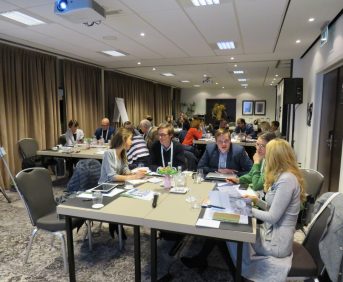
Workshops with usability tests were performed with four different professions who are expected to use the intranet information and communication from the hospital pharmacy.
How was it done?
Workshops for selected professionals including pharmacists, pharmaconomists and nurses were held. The workshops consisted of four parts:
1. Video capture and recording test: Participants were asked to find specific information on the intranet. Comments, clicks and movements of the mouse were recorded during the task.
2. Sorting and prioritization the pages: Participants were given screen shots of 57 pages from the intranet. The participants were asked to sort the pages in three categories: need to know, nice to know and insignificant.
3. Evaluation of selected texts: Participants were given 5 examples of texts from the intranet and asked to assess if the text was relevant and understandable.
4. Structured focus group interview: Using a structured interviewguide the use and challenges experienced by the participants were explored.
What has been achieved?
From the present initiative it was found that the structure of the intranet was not optimal and did not reflect the daily needs from the users. The results from the workshops provided a clear guideline on how to restructure the intranet. It is important to make short cuts and optimize search function.
In addition, the initiative revealed how to improve texts:
– Write shortly, concisely and action oriented: “Tell us what to do”.
– Write the most important first, then elaborate and insert links to learn more.
– Use subheadings for skimming the text.
What next?
A campaign is planned to advertise the new intranet structure. Number of users and subscribers on the intranet pages is followed to see if the activity increases. Editors have been educated to write texts that are short, concise and written in an action oriented language
IMPLEMENTATION OF INDIVIDUAL, HOSPITAL PHARMACY-COMPOUNDED NEONATAL TPN
European Statement
Production and Compounding
Why was it done?
Individual total parenteral nutrition (TPN) for neonates was originally compounded by nursing staff on the respective wards. This process of TPN compounding was error-prone. Documentation and traceability was inadequate. Clean room conditions were absent. By transferring the compounding of TPN from the ward to the pharmacy level, several aims were accomplished. Time of nursing staff was released and the highest quality standards for compounding were implemented. By doing so, several types of errors (e.g. overdosing, wrong additives) were eliminated.
What was done?
Development and implementation of nutrition support protocols by using an electronic prescribing and compounding software (catoPAN™) to address the special needs of neonates and ensure a high level of individualized care.
How was it done?
In cooperation with neonatologists, nutrition protocols were developed. Furthermore, a TPN compounding process was implemented and validated, including the validation of catoPAN™ software and compounding pumps. An integrated risk analysis was performed, stability data to allow TPN supply for weekends were generated and fail-safe procedures were determined. To finally succeed, various process and organizational changes concerning the wards, the production and the QC department of the hospital pharmacy were required.
What has been achieved?
Compounding of individualized nutrition solutions within defined standards, predetermined specifications and quality attributes is implemented. The production process is continuously monitored, including complete traceability. A strong interprofessional collaboration between physicians, nurses and pharmacists was established, ultimately leading to a high level of confidence among all members. Workload of nurses in terms of compounding medicines was dramatically reduced.
Currently, we provide nutrition bags for four wards (24 ICU- and 30 intermediate care beds), equaling an average production of 50 bags per day. In 2016, a total of 11.126 bags were supplied, implying an increase of 75% compared to 2015. We expect an increase of around 30% in 2017 due to rising demand.
What next?
With the expansion of TPN compounding to further pediatric wards, new nutrition protocols addressing other requirements have to be developed. Process changes are likely to follow. Further support can be provided by pharmacy-based IV admixture service. Additionally, due to current software updates, the prescribing and compounding software catoPAN™ must continually be revalidated.
A 72 hours training program for pharmacy residents to perform secure, optimized and standardized medication review orders: a proof of concept
European Statement
Education and Research
Author(s)
Sophie Renet, Florian Le seigneur, Ratiba Haddad, Andre Rieutord, Marie Camille Chaumais
Why was it done?
The high turn over rate of medical and pharmacy residents (every 6 months) could jeopardize the patient’s care management as they generally lack of appropriate skills upon arrival. Our former process medication review was relying on individual and heterogeneous competencies of pharmacy residents likely to lead to sub-optimal medication review and treatment optimisation. We had to design a training program for residents according to the constraints of time and characteristics of related treatment of the considered clinical ward recruited patients.
What was done?
A training program for pharmacy residents was developed and implemented. The aim was to develop the skills of the residents to allow them to perform, after 72 hours, a secure, optimized and standardized (SOS) medication review orders, according to the specificities and the “real-life practice” of the clinical department.
How was it done?
Through a collaborative approach (residents and seniors pharmacists, physicians, PhD student in education sciences), ADDIE (Analyse, Design, Development, Implantation, Evaluation) method was used. First, the most frequent pathologies and drugs prescribed in the cardiology department were identified to define specificities and thus custom the educational needs and skills that residents have to acquire to ensure a SOS medication review orders. The program included a 3 steps process over 3 days: (1) recognize the organisation and learning tools; (2) practice 3 clinical medication review orders simulation; (4) assess and feed-back with a senior clinical pharmacist. Some learning tools were developed: a training tool kit to guide the learners ; an aid kit, including a SOS medication review orders algorithm to follow throughout the whole process. Two years after implementation, 4 pharmacy residents have used this training program.
What has been achieved?
Our 72-hours-training program is routinely used for new pharmacy residents. It has been implemented successfully with a high acceptance. They also felt more comfortable to suggest therapeutic advices to the physicians.
What next?
The proof of concept of SOS was successfully done. We are currently extending it for 5th year pharmacy students and develop similar training program for other clinical wards (Surgery, oncology, immunology). In 2017, we expect to share it with our pharmacist colleagues working in the two closest hospitals.