













DESIGNING A PATIENT-CENTRED MODEL FOR CLINICAL TRIALS: INSIGHTS FROM PATIENT JOURNEY MAPPING AND QUALITATIVE RESEARCH IN HOSPITAL PHARMACY

European Statement
Patient Safety and Quality Assurance
Author(s)
Irene Márquez-Gómez, Vicente Escudero-Vilaplana, Fernando Bustelo Paz, José Luis Revuelta Herrero, Roberto Collado-Borrell, Laura Maldonado Yagüe, Alberto Ruiz López-Alvarado, Ana Herranz Alonso, Juana Benedí González, María Sanjurjo Sáez
Why was it done?
Patient experience has been recognised as a critical determinant of healthcare quality, directly influencing adherence, safety, and clinical outcomes. In clinical trials, where investigational drugs and complex protocols often create uncertainty and stress, patients face unique challenges. Enhancing their experience is critical to ensure safety, and engagement throughout the trial. This project aimed to mitigate these vulnerabilities and to foster a more humanised and supportive care environment.
What was done?
A patient-centred model was developed to incorporate patient experience into the pharmaceutical care of clinical trial patients. The initiative sought to redesign care processes within the Pharmacy Department to better address patients’ expectations, needs, and vulnerabilities.
How was it done?
The project followed four phases: (1) Current workflows were mapped to detect bottlenecks in pharmaceutical care (2) Semi-structured interviews with trial participants explored their perceptions, concerns, and unmet needs; thematic analysis was applied to identify key insights. (3) The SAFARI observational method was used to document real-world interactions and organisational dynamics in the drug dispensation area. (4) A Patient Journey Map was created to visualise the care pathway and highlight critical touchpoints requiring improvement.
What has been achieved?
Analysis revealed several unmet needs: insufficient practical information on trial medication, limited visibility of pharmacy as a clinical resource, logistical barriers such as poor signage and physical distance from clinics, and confusion about dispensing procedures. Patients valued close monitoring by the research team but expressed interest in receiving additional pharmaceutical support. Overall, the hospital pharmacy was perceived primarily as a logistical space rather than a clinical partner, underscoring the need to reposition its role within clinical trial care.
What next?
Two key strategies have been defined. First, the establishment of a dedicated pharmaceutical care consultation for trial participants, focusing on critical milestones (pre-screening, treatment initiation, therapy changes), providing structured explanations, written reference materials, and systematic review of interactions and adverse effects. Second, the functional planning of a new Clinical Trials Unit, with improved physical spaces, closer proximity to the research team, and simplified patient circuits. These interventions aim to transform the pharmacy service into a patient-centre ed and supportive environment, and future evaluation will measure their impact on safety, adherence, and patient-reported outcomes.
OPTIMIZATION OF INTRANET COMMUNICATION TO THE CLINIC
European Statement
Education and Research
Author(s)
Nina Kærgaard Hansen
Why was it done?
The initiative was performed to investigate the accessibility and usability of the current intranet in order to improve intranet information and communication from the hospital pharmacy to the clinic.
What was done?
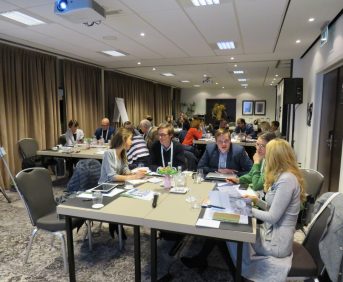
Workshops with usability tests were performed with four different professions who are expected to use the intranet information and communication from the hospital pharmacy.
How was it done?
Workshops for selected professionals including pharmacists, pharmaconomists and nurses were held. The workshops consisted of four parts:
1. Video capture and recording test: Participants were asked to find specific information on the intranet. Comments, clicks and movements of the mouse were recorded during the task.
2. Sorting and prioritization the pages: Participants were given screen shots of 57 pages from the intranet. The participants were asked to sort the pages in three categories: need to know, nice to know and insignificant.
3. Evaluation of selected texts: Participants were given 5 examples of texts from the intranet and asked to assess if the text was relevant and understandable.
4. Structured focus group interview: Using a structured interviewguide the use and challenges experienced by the participants were explored.
What has been achieved?
From the present initiative it was found that the structure of the intranet was not optimal and did not reflect the daily needs from the users. The results from the workshops provided a clear guideline on how to restructure the intranet. It is important to make short cuts and optimize search function.
In addition, the initiative revealed how to improve texts:
– Write shortly, concisely and action oriented: “Tell us what to do”.
– Write the most important first, then elaborate and insert links to learn more.
– Use subheadings for skimming the text.
What next?
A campaign is planned to advertise the new intranet structure. Number of users and subscribers on the intranet pages is followed to see if the activity increases. Editors have been educated to write texts that are short, concise and written in an action oriented language