














Integration of a hospital pharmacy preparer within a new interventional technical platform
European Statement
Selection, Procurement and Distribution
Author(s)
Morgane HOUIX, Valérie VIAUD, Cécilia HURLUPE, Yannick POIRIER
Why was it done?
The pooling of stock for the 5 rooms required a referent for stock management. In order to free up caregivers from the administrative and logistical tasks related to pharmaceutical products, pharmacy has been directly integrated into the project of ITP.
What was done?
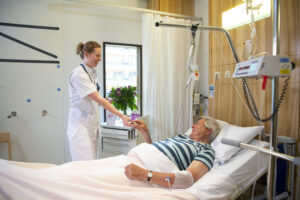
In May 2021, interventional cardiology, rhythmology and coronary angiography have been gathered in an interventional technical platform (ITP) of 5 operating rooms. A full-time hospital pharmacy preparer (HPP) position has been set up within the ITP.
How was it done?
For the success of the project, the 2 chosen PPH had to easily becoming part of ITP’s teams and must learn specifics of medical devices of each speciality. For this purpose an immersion in each sector was carried out during the installation of the ITP and continues today by participating in interventions. They shared in the process of installing the PTI’s arsenal of pharmaceuticals with careteams by grouping the initials allocations of products of each speciality. The products common to each endowment were gathered and harmonized after discussion with caregivers. Each sector has kept a stock of specific devices, called “out-of-stock”.
What has been achieved?
The installation took about 632 hours of HPP time. The allocations for each sector were respectively 68, 69 and 83 references, not including out-of-stock. The HPP’s work allowed reducing the common endowment from 220 to 134 products references. A satisfaction survey of PTI teams (doctors, nurses,…) after 4 months of practice showed a level of 78% of satisfaction. 1.3% of the responses concerned activities related the management of devices affected by production delay or stoppage and information on product changes to be unsatisfactory or moderately satisfactory. Every ITP teams now considers their presence essential, believes that it has improved relations with the pharmacy and management of stocks. A saving in nursing time was also noted.
What next?
The creation of this HPP position seems to satisfy all the ITP teams. A quantitative analysis of the benefits measuring the impact on care time, the amount of over-storage and the compliance indicators of the implantable medical device circuit will be carried out during 1 year, in order to assess the impact of the creation of HPP positions within the PTI.
Project for the optimization of processes for the reception, conditioning and storage of medicines
European Statement
Production and Compounding
Author(s)
PATRICIA ORTIZ FERNANDEZ, Alba Maria Martinez Soto, PILAR FERNANDEZ-VILLACAÑAS FERNANDEZ, IGNACIO SALAR VALVERDE
Why was it done?
The objective is to improve patient safety, detecting mistake in real time. Review good work practices and achieve greater effectiveness. Improve the communication of the work team.
What was done?
Improve the quality of the reception, conditioning and storage processes that are carried out in the pharmacy service using tools that in the field of quality have shown great effectiveness. Simplify processes and update work instructions and standardize these. Establish quality indicators.
How was it done?
ing the `Lean healthcare´methodology based on eliminating inefficiencies in work processes and identifying opportunities for improvement which are specific, measurable, achievable, relevant and time bounded. Another of the methodologies used is the `5S´ (five basic elements: selection, systematization, cleaning, normalization and self-discipline) and `PDCA´(plan, do, check, act).
1. Establish a multidisciplinary group.
2. Training on the methodology developed in 5 sessions.
3. Elaboration of a project charter with the objetives, the scope and the planning.
4. Analyze the chosen processes with the following dynamics: a) Team visit to the work area, b) Interview an expert from each process, c) Registration of inefficiencies and process data in a value steam mapping, d) Compilation of possible improvement actions, e) Meeting for consensus and realization of an action plan to prioritize and assign those responsible for carrying out the improvement actions.
What has been achieved?
Number of meetings with the multidisciplinary team: 10
Reception process: improvements implemented(II): 11, pending improvements (PI): 2, indicators evaluated (IE): 4
Conditioning process: II: 4, PI: 0, IE: 2
Storage process: II: 13, PI: 2, IE: 2
What next?
Must be maintained and evaluated over time and anytime there that may be a change. These improvements allowed a better anticipation. The process improvement approach aimed to identify solutions was very fruitful and led to outcome practical. This method could be applied to improve other types of processes in our pharmacy service.
Which analytical method for parenteral nutrition mixtures dosing to choose? A regional comparative study
European Statement
Production and Compounding
Author(s)
Joan-Candy MABIN , Aïssé DIALLO, Hortense LANNELUC-BEAUJARD, Xavier DEVIOT
Why was it done?
The aim of this work is to find a cheaper alternative, reducing the analysis duration and allowing the pharmacy to be laboratory independent.
What was done?
The opening of the production unit (PU) leads to reorganize the parenteral nutrition mixtures (PNM) dosing. Primarily carried out in the biochemistry laboratory of our hospital, potentiometry and colorimetry analysis were long (more than an hour) and costly. PNM composition accelerates the aging of one of the device components that costs 1400 euros and have to be changed every 3 weeks, raising the total around 24300 euros per year only for this component.
How was it done?
Hospitals producing PNM in the region were identified and approached. They were asked about the type of dosed elements, the analysis method and the equipment used, about the analysis duration and localization (laboratory or pharmacy departments) and their overall cost estimation.
What has been achieved?
Five hospitals with different dosing equipment answered. Four of them analyze cations: calcium, magnesium, sodium and potassium by capillary electrophoresis, potentiometry or spectrometry, three of them analyze glucose by chromatography or colorimetry, and two of them determine osmolarity of the PNM mixtures. Dosages are performed by the pharmacy department in three PU where technician are required. Results are provided in about an hour when the activity depends on the laboratory and around five to ten minutes when it is managed by the pharmacy department. The average cost to purchase the equipment for each hospital was around 50000 euros (without the associated materials and the labour cost).
What next?
To conclude, no hospital interviewed can be a model because of either the high costs or the unadapted equipment size to the scale of the room of our PU. Nevertheless, during discussions, an equipment that might answer our needs was suggested, because no technician is needed for analysis, and it is described simple and easy to use. The manufacturer has been reached out asking for demonstration and information before any purchase. If accepted, the device will be qualified before going into production.
COVID-19: Guidelines for Infection Prevention and Control in a Hospital Pharmacy According to ISO 9001:2015
European Statement
Patient Safety and Quality Assurance
Author(s)
SUSANA SANCHEZ SUAREZ, JOSE ANTONIO VINAGRE ROMERO, MARIA ISABEL BARCIA MARTIN, CAROLINA AGUILAR GUISADO, MERCEDES GARCIA GIMENO
Why was it done?
To keep occupational health and safety during a crisis in which healthcare settings were overloaded and facing a critical shortage of skilled professionals, due to sick leaves (2,75% of total cases), and for the need to maintain high quality of care processes. These were a big challenge that required to adapt operating procedures. In addition, and due to the effect of COVID-19 on the general population (overall incidence rate of 10.596 per 100,000 people) and in healthcare systems, the Spanish Ministry of Health (SMH) issued a technical document establishing a series of recommendations for COVID-19 infection prevention and control in patients medical assistance. This practice was designed to bring together national guidelines from the SMH that aimed to reduce COVID-19 impact, both in healthcare workers and general population, and meet ISO 9001:2015 requirements in SOP of a HP within a general hospital
What was done?
In order to ensure safe systems of work (SSoW) in the hospital pharmacy (HP) during the COVID-19 pandemic, specific operating procedures (SOP) were adopted in order to prevent the risk of contagion in daily operations for both patients and staff, according to the norm ISO 9001:2015
How was it done?
Four critical areas were identified according to risk management: High-risk areas: Preparation Area (PA) and Outpatient Dispensing Area (ODA); medium-risk area: Pharmacy Administration Area (PAA) and Inpatient Dispensing Area (IDA). Some SOPs were developed within these areas: Autologous serum eye drops preparation in the PA, pharmaceutical care and medication dispensing in the ODA, pharmacy receiving in the PAA and medicines return from COVID-19 areas. Different circuits were implemented for users and professionals, as well as general information and procedures directed at patients and personnel, to prevent infection. The individual protection equipment required in each SOP/area was also established
What has been achieved?
No COVID-19 case has been reported due to patient-professional interactions or working location and tasks. All operating procedures have been revised to fully comply with SMH guidelines and ISO 9001: 2015 requirements mitigating risks and maximizing performance in such critical circumstances
What next?
Adapting SOP to any infectious disease outbreak that may occur in the future and establishing early-detection mechanisms
LEARNING FROM SARS-CoV-2 EXPERIENCE TO FACE FUTURE EMERGENCIES: ELABORATION OF A HOSPITAL PHARMACY EMERGENCY PREPAREDNESS PLAN

European Statement
Introductory Statements and Governance
Author(s)
Edoardo Calzavara, Elena Galfrascoli, Stefania Vimercati, Lorenzo Gambitta
Why was it done?
The discovering of Coronavirus disease in 2019 and the subsequent outbreak in many countries and regions constituted in the first 5 months of 2020 a prominent issue worldwide: hospital pharmacists as well as other health care personnel were hit by pandemic emergency and faced a great challenge. We as hospital pharmacists had to cope with shortage of drugs, disinfectants, test and reagents, Intensive Care Unit medical devices, personal protective equipment. For this reason, we needed to start interventions to meet the needs of the front-line medical and nurse staff.
What was done?
We decided to start a self-auditing process, we aimed to realize an emergency preparedness plan and a procedure, created from our experience, which will be helpful to face future emergencies.
How was it done?
The starting point was our Hospital Pharmacy process map, which identifies all pharmacy activities. For each one, actions taken during the emergency were described. Regulations at local and national level were analysed together with literature and international statements about hospital pharmacist role during health emergency.
What has been achieved?
We developed a process map in which we split up pharmacy activities into five big areas:
1. DIRECTION AND COORDINATION: team communication, role and responsibilities definition (“role mapping”); multidisciplinary external communication with hospital management facilities;
2. LOGISTICS AND ADMINISTRATION (Purchase, management and distribution of medical products): an inventory of drugs, medical devices and diagnostics was created, especially for the ones essential to challenge SARS-CoV-2 health emergency;
3. RESEARCH, GALENIC, “PATIENT CARE”: therapeutic protocols, galenic preparation, studies, home-therapies distribution and communication with patients;
4. PHARMACOVIGILANCE: close monitoring of potential Adverse Drug Reactions (ADRs);
5. REGULATIONS AND LEGISLATION: Updating and intra-hospital divulgation.
From this emergency process we created an emergency preparedness plan and an internal procedure, in which, for every activity area, we assigned specific roles and responsibilities and set operating instructions.
What next?
The emergency preparedness plan developed from our experience during SARS-CoV-2 emergency, will allow hospital pharmacists to anticipate, plan, and prepare strategies in case of future health emergencies, due to biologic infective agents. Our and other Hospital Pharmacies will be able to overcome priority drugs shortages, to set a drug home delivery service, to offer extemporary solutions, communicate and inform patients.
OPIOIDS STOCK OPTIMISATION UTILISING AUTOMATIC DISPENSING SYSTEMS DURING AND AFTER COVID-19 PANDEMIC
European Statement
Selection, Procurement and Distribution
Author(s)
MARINA RODRÍGUEZ MARÍN, HILARIO MARTÍNEZ BARROS, MARÍA DEL ROSARIO PINTOR RECUENCO, BEATRIZ MONTERO LLORENTE, ANA MARÍA ÁLVAREZ DÍAZ
Why was it done?
It was done in order to optimize opioids stock to meet the needs of COVID-19 patients and protocolize the correct quarantine without modifying the computerized registration in the 39 ADS.
What was done?
A procedure was implemented to optimize the stock and manage the quarantine of opioids in Automatic Dispensing Systems (ADS) during and after their use in hospital units hosting COVID patients.
How was it done?
As hospitalization units were being adapted to host COVID-19 patients, opioids stock had to be modified to meet their new demands. Reversely, when hospitalization units were recovered to host their usual type of patient, the opioids had to be replaced and quarantined for ten days, according to our Preventive Medicine Unit. All these movements were recorded.
We followed this process:
1. Physical and computerized unloading of opioids without dispensing in recent months and emptying of the returned drawer (storage space for opioids withdrawn from the ADS which were not used).
2. Relocation to hospitalization units hosting COVID-19 patients,
3. Replacement of all (minidrawers) where opioids were kept with clean ones
4. Quarantine in the Pharmacy Service, for the drugs unloaded which were unable to be immediately relocated.
5. Cleaning and sanitizing of the removed minidrawers from COVID-19 hospitalization units’ ADS to be used in the next conversion.
What has been achieved?
29 ADS of the 39 available in the hospital were optimized.
Given the decreased in COVID-19 admissions during May, the hospital made a schedule to return to normality which allowed to leave 5 ADS in quarantine without the need to unload or replace any drug,. The other 24 ADS had to be cleaned and disinfected,. It led to the physical unloading of 182 specialties (a total of 1,519 units), the physical and computerized unloading of 124 specialties (850 units) and the emptying of the returned drawers (18 specialties and 20 units). 504 minidrawers were replaced by other cleaned and disinfected ones and 298 specialties (2,080 units) were replaced.
What next?
Enhancing our protocol to allow us to spend more time with the patients in Covid’s further waives.
REVIEW OF THE HOSPITAL HIGH-ALERT MEDICATIONS LIST USING HOSPITAL AND INTERNATIONAL DATA (submitted in 2019)
European Statement
Patient Safety and Quality Assurance
Author(s)
Božena Bürmen
Why was it done?
In University Medical Centre Ljubljana (UMCL) a HAM list was created in 2008 and has not been significantly changed since then. Our aim was to develop a systematic strategy to review the list by including local data.
What was done?
We comprehensively updated the hospital list of high-alert medications (HAM) and identified hospital specific medications not yet present on HAM lists. We joined international HAM data supported by medication error (ME) reports and expert opinion with data from the hospital ME reporting system.
How was it done?
We analysed 390 MEs submitted to the UMCL ME reporting system from 2016 to 2018. We compared the HAM list from Institute for Safe Medication Practices (ISMP) and the UMCL HAM list. The criteria such as frequency of the reported ME, severity of harm for the patient, affected population, novelty, etc, were used to identify potential HAM. Furthermore, we calculated the probability of the ME report for the individual medications from the reported MEs and the hospital medication consumption data. The calculation was done for the medications involved in 3 or more reported MEs (Tyynismaa et al, 2017) and for the medications involved in MEs which caused harm to the patient.
What has been achieved?
The joined results from the comparison of HAM lists and reported MEs showed that several other medications could be added to the UMCL HAM list, e.g. individualised parenteral nutrition for the paediatric population, oral sedation agents for children, dialysis solutions, lidocaine IV, methadone, bupivacaine, and nusinersen. The probability-based HAM identifying method supported our previous suggestions to extend the UMCL HAM list. Additionally, the method unexpectedly revealed medications with a high probability of ME and/or harm for the patients, that are not included in any HAM list (ISMP, UMCL), such as romiplostim, parenteral iron preparations, ampicillin with sulbactam, and others.
What next?
In future we plan to develop a paediatric specific HAM list based on the same strategy; i.e. considering international suggestions and analysing paediatric ME reports in UMCL.
PROCEDURE TO ENSURE CORRECT MEDICATION MANAGEMENT IN THE PERIOPERATIVE PROCESS (submitted in 2019)
European Statement
Patient Safety and Quality Assurance
Author(s)
Noelia Vicente Oliveros, María Muñoz García, Álvaro Ruigomez Saiz, Montserrat Ferre Masferrer, Teresa Bermejo Vicedo, Eva Delgado Silveira, Lucía Quesada Muñoz, Ana María Alvarez-Diaz
Why was it done?
An analysis of the indicators of the perioperative process reflected the need to improve their quality. One of the causes of scheduled surgery cancellation was the lack of the follow up of the anaesthetist’s medication recommendations. Medications need to be carefully managed to prevent perioperative complications.
What was done?
We designed and implemented a flow chart to ensure the patient compliance of anesthetist’s medication recommendations prior to surgery. We designed a protocol for the perioperative medication management.
How was it done?
A multidisciplinary group was formed with the management of the hospital and representatives of all the services involved in the perioperative process. The group designed the flow chart of the process by consensus. Patients were candidates to enter in this process if they were on treatment with anticoagulant or 2 or more medications from the following groups: antiplatelet, antihypertensives, antidiabetics. A pharmacist called by phone three times (the day before, the day of medication change, and the day after) to the patient to ensure the compliance of anaesthetist recommendations. If there was a lack of compliance, the pharmacist contacted the surgeon who was in charge of deciding if the surgery procedure continued as scheduled. Moreover, the domiciliary medication of these patients were reconcilliated and recorded in their health record. Healthcare professionals could consult it during hospital stay. The group designed a protocol for the perioperative medication management with different medical specialists.
What has been achieved?
The project started in April 2019. The pharmacist called patients with scheduled surgery of lower limbs. A total of 31 patients benefited from the new flow chart. The pharmacist detected 38 medication errors; two involved errors concerning the suspension of anticoagulant drugs prior to surgery and four implied antihypertensive drugs. Once, it was necessary to contact the surgeon. In this case, the surgeon decided to continue with the surgery as schedule. Fifty-seven medications suffered a change in the period between the anaesthestic visit and the surgery, nine of them belonged to the monitored medication group.
What next?
The next steps are to spread the flow chart to other patients, to distribute the protocol among hospital healthcare professionals and to implement a procedure for the reintroduction of the modified medication.
MAKING CLINICAL PHARMACY ESSENTIAL IN A LARGE UNIVERSITY HOSPITAL
European Statement
Clinical Pharmacy Services
Author(s)
Janne Kutschera Sund, Martin Grotnes, Ingvild Klevan, Lene Lilleaas, Johan Fredrik Skomsvoll
Why was it done?
Lack of comprehensive strategies and funding has made it difficult to develop and implement extensive clinical pharmacy services in our hospital. It has been challenging to secure hospital involvement. A new financial model securing funding from the regional health authority made way for a new joint approach.
What was done?
A dialog based process involving hospital management, clinicians and the pharmacy led to a large increase in clinical pharmacy services in our university hospital.
How was it done?
A literature review was conducted. Based on this, a multidisciplinary project group decided that all clinics and wards were eligible for clinical pharmacy services and should receive extensive information on the topic. As there were limited resources allocated, all clinics were asked to apply for the service. The hospital management received applications three times the number of funded clinical pharmacists.
Prioritizing was based on the following criteria; use of the Integrated Medicines Management (IMM)-method, patient flow, evaluation and research, in- or out –patient clinics, continuation of established services, localization and time schedules on the wards.
What has been achieved?
The long term funding of clinical pharmacy in the health region enabled the hospital pharmacy to recruit and educate highly competent clinical pharmacists.
In less than a year, the number of clinical pharmacists has increased from three to twelve. The number of wards receiving clinical pharmacy services has also grown from three to twelve and there are still plans for further implementation.
The hospital and the ward managements are much more involved in evolving a common patient safety strategy with focus on medication. Specific quality indicators for each patient population and ward are being developed, and clinical pharmacists are now important members of multidisciplinary teams all over the hospital. Pharmacists are integrated in ongoing clinical research projects and publishing.
User surveys show that clinical pharmacy is assessed as a highly beneficial service by both nurses and physicians.
What next?
Develop the IMM-model to include the clinical pharmacists in standard patient care in every clinic and department. We plan to perform follow-up studies on the effects of clinical pharmacy services in different settings.
SHORT, TARGETED NEWSLETTERS IMPROVE ADHERENCE TO NATIONAL TREATMENT GUIDELINES
European Statement
Introductory Statements and Governance
Author(s)
Ane Hornbaek Mortensen
Why was it done?
Previously, a quarterly report showing adherence to national treatment guidelines was issued to all hospital administrations in our region. It was their responsibility to forward this to the appropriate specialists/consultants. This often failed and even when it was done, our experience showed that it wasn’t read by the consultants. Consequently, prescription patterns didn’t change despite the report highlighting the wards that weren’t complying with the national treatment guidelines.
What was done?
Short newsletters including graphs/tables showing the ward’s degree of adherence to national treatment guidelines were emailed to the chief consultant of the specific ward.
How was it done?
In our region a 6-person analytical team, which includes 3 hospital pharmacists, monitors adherence to national treatment guidelines issued by our national council for the use of expensive hospital medicines (RADS). Based on the results, the analytical team decides which newsletters to write. The hospital pharmacists in the analytical team are responsible for writing the newsletters and emailing them direct to the relevant specialist/consultant.
What has been achieved?
It seems as if the introduction of more targeted information has led to more rapidly changing prescription patterns. One example is oral iron chelating agents to hematological patients where a RADS guideline was issued recommending that all new patients should receive deferipron instead of deferasirox. This information was initially issued through the usual channels (via hospital administration) but no change in the use of deferipron/deferasirox was seen. This only happened after emailing a newsletter directly to the chief consultants of the three hematology wards in our region, showing the current use of deferipron/deferasirox and the potential cost reduction. Nine months and three newsletters later the percentage of deferipron use on the hematology wards increased from 2% to 27%, leading to a 22% cost reduction. Target was 25% deferipron (the guideline only covered new patients). The total increase in the percentage of deferipron use on hospitals in our region was 351% compared to an increase of between 0 and 19% in the other four national regions.
What next?
Continued and increased use of targeted communication in the health care system is required to ensure that specific information reaches the relevant players.