















COST-EFFECTIVENESS OF PERSONALISED THERAPY IN A RARE CANCER CASE AT END-OF-LIFE: A REAL-WORLD EXPERIENCE

European Statement
Clinical Pharmacy Services
Author(s)
Rossella Centola, Elisabetta D’Amico, Stefano Morabito, Maria Alfieri, Maria Giovanna Elberti, Lucilla Grisi, Giorgio Lilla, Amelia Filippelli, Francesco Sabbatino
Why was it done?
Precision Medicine (PM) in oncology remains a highly debated topic within Italian healthcare institutions. Currently, Next-Generation Sequencing (NGS) tests are not included in the Essential Levels of Care (LEA), and reimbursement policies vary across regions. Moreover, most targeted therapies based on mutational profiling are prescribed off-label.
What was done?
This study aimed to conduct a cost-effectiveness analysis of a personalised cancer therapy administered in an end-of-life setting.
How was it done?
Clinical and prescription data were collected for a targeted treatment with olaparib. Data were presented as a case report, and median progression-free survival (PFS) and overall survival (OS) were calculated in months. A cost-effectiveness analysis was performed comparing standard care with NGS-driven therapy, using company management software to estimate healthcare expenditure. The Incremental Cost-Effectiveness Ratio (ICER) was calculated and compared against a willingness-to-pay (WTP) threshold of €60,000, considering the rarity of the tumour.
What has been achieved?
The case involved a 56-year-old male diagnosed with cholangiocarcinoma in 2017. After multiple treatments, an NGS test revealed a BAP1 gene mutation associated with a BRCA-like phenotype. Off-label treatment with olaparib 300 mg BID began in June 2019. The personalised therapy resulted in a PFS of 21 months compared to approximately 2 months with best supportive care (standard treatment), and an OS of 48 months versus 29 months, respectively. The cost-effectiveness analysis, conducted from the Italian National Health Service perspective, considered direct healthcare costs including disease management, drug administration, and management of serious adverse events. Personalised therapy showed a survival gain of 2.5 life-years (LY) compared to 1 LY with standard care. The resulting ICER was approximately €45,000 per LY gained—well below the €60,000 WTP threshold.
What next?
This case illustrates that applying PM in end-of-life care for a rare cancer can yield significant survival and economic benefits. These findings highlight the need for greater integration of PM into clinical trials, structured data-sharing networks, and the establishment of solid evidence-based and pharmacoeconomic frameworks.
PERFORMING A COMMITTEE OF EVALUATION OF TREATMENTS IN SPECIAL SITUATIONS
European Statement
Clinical Pharmacy Services
Author(s)
Susana Redondo-Capafons, Laura Soriano, Irene López-Rico, Jorge Del Estal, Rocío Cebrián, Marcela Manriquez, Maria Reventós, Sandra Fernández-Molina, Mònica Gómez-Valent
Why was it done?
Before CTSS was performed, TSS were requested to Pharmacy Department for evaluation and decision. Because of complexity of these treatments, it was decided that it was necessary to evaluate them with other professionals to make a consensual decision.
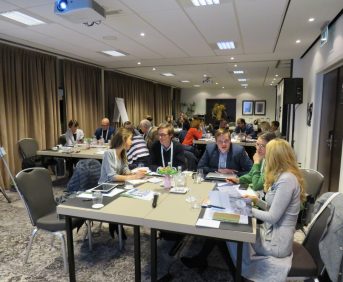
In May 2019, CTSS was born. It is a multidisciplinary committee with 10 different health professionals: head of pharmacy, head of healthcare management, head of strategy and operations management, a clinical pharmacologist, five pharmacists and a secretary. Requesting doctors and heads of involved services are invited to explain TSS in the meeting.
What was done?
Committee (C) of Treatments in Special Situations (TSS) (CTSS) have been established. Requests are received by a specific email for the committee and a standard template was performed to be completed by requesting doctor (patient clinical information and evidence supporting request) and by Pharmacy Service (regulatory status of the drug, pharmacology and cost of treatment).
How was it done?
Some limitations as lack of human resources with exclusive dedication for making reports and lack of training in evaluation of this kind of treatments are the most important obstacles. Currently, each member is self-taught and under excessive work- pressure.
What has been achieved?
From May 2019 to August 2021, 273 treatments in 59 meetings sessions (average 4.63 evaluations/meeting) were evaluated.
The 91,6% of treatments were approved. In 95,9% of requests, one drug was evaluated.
There were 18 services involved, being oncology and hematology the most active departments.
Evaluated TSS were classified in six categories: 66,7% of requests were drugs without approved indication, 19,8% drugs approved indication pending price by government, 2,5% approved indication but denied funding by government, 1,8% foreign medicines, 4% compassionate use and 5.2% others according to criteria of each autonomous communities in Spain.
What next?
CTSS allows make a consensual decision between different professionals and establishes a flow to manage TSS requests. This multidisciplinary scenario generates knowledge and evidence in the use of these kind drugs reducing uncertainty in TSS use in relation to its efficacy and safety and, in cases of high budgetary impact-drugs, to minimize inequities of access by standardizing decision-making. Applicable to all hospitals.