












EMERGENCY DEPARTMENT PHARMACY ROTATION, WHAT IS A PHARMACY RESIDENT DOING HERE?

European Statement
Patient Safety and Quality Assurance
Author(s)
Nuria Monteagudo-Martínez, Ana Valladolid-Walsh, Gregorio Romero-Candel, Esther Domingo-Chiva, Jose Marco-del Río, Marca Diaz-Rangel, Francisca Sanchez-Rubio
Why was it done?
To acquire clinical skills in this setting and detect and prevent medication errors. It is also an area in which pharmacists had previously never participated in our hospital and it was an opportunity to integrate in this multidisciplinary team.
What was done?
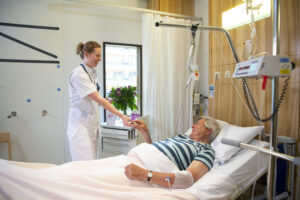
Hospital pharmacy specialization programs include one year of rotations in clinical areas. The emergency department (ED) was chosen in order to develop a program to detect and prevent medication errors as a part of a multidisciplinary team.
Other tasks such as organizing drug storage, drug labelling and conservation, nurse counselling and education on issues related to medication were developed.
How was it done?
The pharmacy resident completed a rotation period based on the national educational program in clinical areas. Over a two month rotation period she reviewed treatments (61 patients, detecting 67 medication errors), organized and labelled drug storage, listed and identified thermolabile drugs, participated in a protocol design,…
What has been achieved?
The resident was able to improve care in acute patients in the ED. The most common errors found and prevented were: missed doses (25.3%); incorrect form to administer the drug (incompatibility diluent, infusion rate…) (13.4%); drug interaction/incompatibility (8.9%) and others.
The resident was able to organized refrigerator drug stored and developed a protocol to explain how to act in case of fridge failure.
What next?
To try to implement an ED-based clinical pharmacist program in order to detect and manage medication errors to improve safety in drug therapy, as well as to contribute to patient care with a different point of view from clinicians.
Development of a guide intravenous administration
European Statement
Clinical Pharmacy Services
Author(s)
Gregorio Romero Candel, Esther Domingo Chiva, Jose Marco del Rio, Marca Diaz Rangel, Wals Valladolid, Sergio Plata Paniagua, Nuria Maryinez Monteagudo
Why was it done?
Critically ill patients often require the administration of several intravenous drugs. Besides, we have many times limited intravenous accesses in which the administration of drugs and other intravenous compounds such as parenteral nutrition must be shared.
Because of that, it is very important to have drug administration guides standarizing every-day clinical practice.
This guide was developed in order to reduce the health care workers burden and promote patient’s safety.
What was done?
We developed an updated guide on direct intravenous administration of drugs for health care workers of both critical care and emergency departments.
How was it done?
A database with every intravenous drug that is included in the Pharmacotherapeutic Guide in our hospital was prepared, alphabetically organized by Active Pharmaceutical Ingredient (API). The following data were collected: API, tradename, available dosage forms and recommendations for direct intravenous administration.
For each API, a bibliographic research of information was conducted, among other hospital administration guides, manufacturer´s product information, drug databases (BOT plusR, Micromedex) and requests of information to the technical departments of the manufacturer.
In case of a discrepancy in the information, the guide with higher evidente or more recent was selected.
The antineoplastic drugs were not included in this guide because they are not used or prepared in critical care or emergency departments.
What has been achieved?
This guide promotes safe administration of drugs in critically ill patients, being a useful, accesible and easy-to-use tool for nurses.
Its elaboration allows us to standarize the direct intravenous drug administration, to inform every health care worker and make them aware about its importance. Besides, the Pharmacy Department actively participated in the process of safe drug administration in our hospital
What next?
We are still working on the same departments to improve safety in drug therapy in critically ill patients. Currently, improvement measures that are being developed are: new pharmacotherapeutic protocols specifically for this unit; drugs and drug-diluent compatibility guidelines and new training sessions.
EASE OF ACCESS TO INTRAVENOUS DRUG COMPATIBILITY INFORMATION FOR CLINICAL PRACTITIONERS
European Statement
Patient Safety and Quality Assurance
Author(s)
K. Teimori, H. Colldén, R. Asadian Falahieh
Why was it done?
Therapy at an intensive care unit (ICU) involves co-infusion of multiple drugs into the same IV line. This may involve mixing of incompatible drugs resulting in particulates being infused, putting the patient at risk. In 2012, a local survey showed 65% (n=142) of participating nurses had co-administered drugs where they were unsure of their compatibility. Preventing incompatibilities by providing healthcare practitioners with point of care IV drug compatibility information fitted to local needs was deemed a necessity. Drug compatibility requires a thorough understanding of chemistry, and information from published studies must be evaluated and assessed to determine applicability to local clinical conditions. Clinics had requested the support of pharmacists for this work.
What was done?
An online intravenous (IV) compatibility database based on these data was created. A group of international clinical pharmacists interested in collaborating in improving the quality of the database was identified. Information material aimed at educating healthcare personal was developed.
How was it done?
Published drug compatibility data and information on physiochemical properties were collected and assessed by a team of hospital pharmacists for applicability to seven clinics. Support, guidance and expertise in the subject had been readily offered to clinical practitioners through telephone calls, email and meetings.
What has been achieved?
Six custom compatibility charts totaling 3600 drug pairs have been created, and procedure documents for IV compatibility have been implemented in each clinic. Over 30 educational lectures on IV compatibility have been held.
The database consisting of 2500 drug combinations presents accessible detailed information on compatibility. Its quality is continuously reviewed by international colleagues.
What next?
The database is fitted to national clinical traditions, providing accessible data to nurses and physicians to support decisions on which drugs to co-infuse. In the next few years, the database will become nationally available. If integrated into the electronic journal system, this could help doctors consider compatibility issues while prescribing, further improving patient safety.
National monitor for the quality of medication surveillance
European Statement
Patient Safety and Quality Assurance
Why was it done?
.
What was done?
.
How was it done?
.
What has been achieved?
.
What next?
.
Medication Safety Audits developed and conducted by a hospital pharmacy in Finland
Author(s)
E. Celikkayalar, E. Suvikas-Peltonen, J. Palmgren
HIGHLY ACTIVE ANTIRETROVIRAL THERAPY PRESCRIPTIONS IN NAIVE PATIENTS: IMPROVEMENT PLAN
European Statement
Patient Safety and Quality Assurance
Author(s)
A. Rodríguez-Perez, M.I. Sierra-Torres, M.D. Toscano-Guzmán, A. Monzón-Moreno, M. Soriano-Martinez, A. Lluch-Colomer, M.D. Santos-Rubio
Why was it done?
According to the guidelines and recommendations for the rational use of medication, prescriptions of HAARTs must be standardised following the principles of efficiency and based on the best evidence available.
What was done?
A multidisciplinary group of clinical pharmacists and physicians made an easy-to-read handout that summarised the main recommendations of GESIDA for the treatment of naive patients, treated with highly active antiretroviral therapy (HAART). The hand-out consisted of a table with the allowed and not-allowed antiretroviral combinations and the exceptions. The multidisciplinary group disseminated the handout to the prescribers through clinical sessions. The multidisciplinary group made a 6 month study to evaluate the adherence to GESIDA, previous and after the implementation of the easy-to-read handout.
How was it done?
We did not have any problem implementing these recommendations or organizing the clinical sessions.
What has been achieved?
The multidisciplinary group made a retrospective study of the 6-months previous the implementation of the handout, by a chart review of the prescriptions. One hundred naive patients were evaluated. We found an eleven per cent of deviations of the recommendations, none of them justified. The multidisciplinary group made a prospective study during a 6-months period after the implementation of the handout, by a chart review of the prescriptions. Seventy-one naive patients were evaluated. We found a 7% of deviations of the recommendations, three of them were justified because of co-morbidity that contraindicated the recommended medication. We also made a follow-up of the treatment of the patients of the retrospective study, six of the eleven patients of that group changed their HAART to the recommended ones.
What next?
The multidisciplinary team has periodic meetings to evaluate the adherence to the recommendations and to study news reported by GESIDA. The economic impact of the practice is planned to be evaluated.